St. Andrew’s East – 1986 to the present
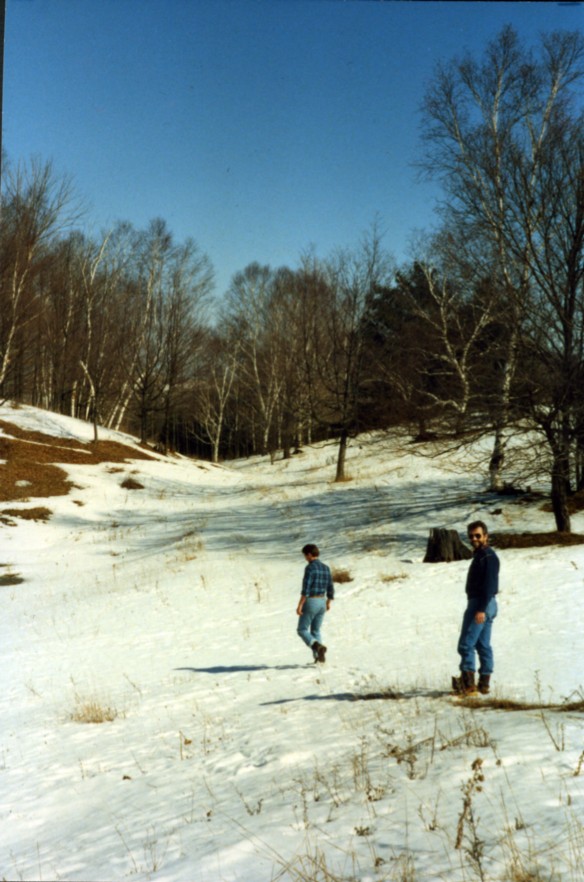 In the winter of 1986, founders Bill MacWilliam and David Paterson first walked the land soon to become known as St. Andrew’s East Golf & Country Club. The property was purchased within days of the initial sighting. Golf course architect Rene Muylaert was selected and Municipal approvals along with designs were soon in place. With full co-operation of the farm’s owner, James Ray, they proceeded to excavate large ponds to help provide additional mounding and reservoirs for the future irrigation system. All this was carried out before closing of the purchase and sale agreement. Even as late as the 1980’s much could be done with a mere hand shake!
Upon taking ownership, construction began in earnest in April 1987. While the work proceeded on the course they began clubhouse construction immediately upon receiving the final plans from builder Robert Salhani.  Robert along with architect Hiro Nakashima located the new clubhouse on the highest point of land for maximum views of both the golf course and Toronto’s skyline. Strategically placing the clubhouse in this location allowed the golf course architect to create four separate starting points including numbers one, six, ten and sixteen. The importance of this configuration fit St. Andrew’s number one goal of having a private facility with no starting times required.
The next two years were, without doubt, the most exciting and fulfilling experience for both Bill and his wife Patricia. This, along with being married half a mile south of St. Andrew’s in downtown Lemonville, topped off the best two years of their entire lives. To this day Bill is often reminded, by many of the original members, of their initial course introduction. Bouncing in the Ford Bronco over hill and dale listening to his vivid descriptions of the wonderful golf holes that were about to appear in the near future.
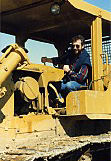
For Bill, those visions were already there. Meanwhile, the prospective member would be observing nothing but mud! Opening day St. Andrew’s fortunately found themselves fully subscribed with a waiting list of ten. St. Andrew’s partners would like to thank all those wonderful members who were willing to buy into their dream.
Upon near completion of the Club in the summer of 1988, St. Andrew’s chose to open eight holes for play and completed the additional ten by September 1st, 1988.
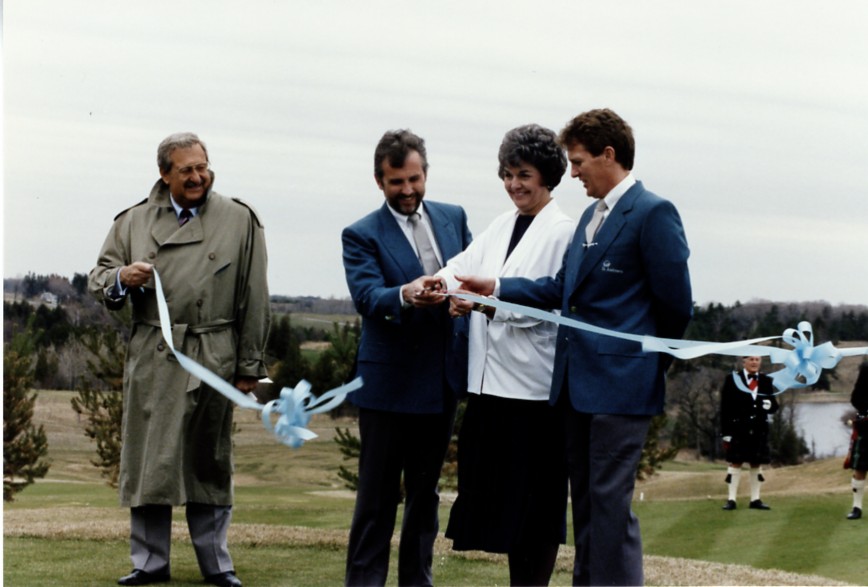 The official golf course opening began with a ribbon-cutting by David Paterson, Wally Crouter, Mayor Sainsbury, Bill MacWilliam and a Scottish Pipe Band in the spring of 1989, followed soon after by a full blown snow storm! Fun was had by all and St. Andrew’s history was officially launched.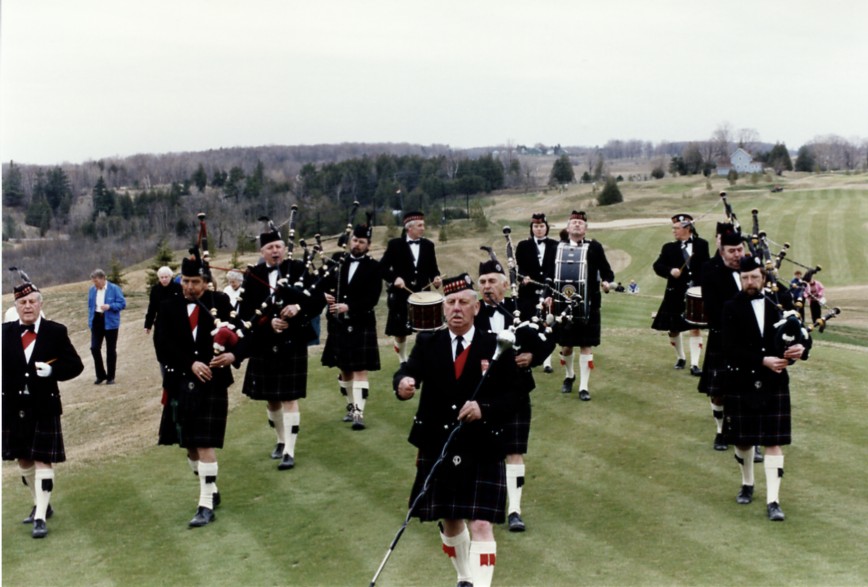
Changes came quickly following the start up. In the fall of 1989, the Membership approached David Paterson and Bill MacWilliam asking as to the possibility of purchasing St. Andrew’s in the form of equity ownership by the existing members. They proceeded to put forth a formal proposal to the members which, after two meetings with the two parties, arrived at an acceptable arrangement and proceeded to pass on ownership to the committed members. Shortly after the management company entered into a management contract with the club which continues to this day.
Starting in the early nineties St. Andrew’s began a process of upgrades to the golf course which we have continued up to the present day. While the initial reconstruction included enlargement of many bunkers and tee deck’s, in 1997 the club, with a vote of 165 to 1, agreed to purchase thirty-five acres of extraordinary land running north of the existing course.
Rene Muylaert was brought back in to design three new holes thus replacing eleven, twelve and thirteen. These additions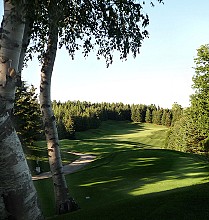 increased the length of St. Andrew’s by over three hundred and fifty yards. The new holes were then built and opened in the spring of 1999 with absolutely no disruption of play during construction. The old holes were allowed to return into their natural state, creating a whole new dimention to the property. St. Andrew’s also rebuilt number fifteen taking it from a short par five to a lengthy par four. The following year the Club managed to rebuild the third hole by re-shaping and doubling the fairway width. With the removal of a number of cedar trees along the right side the architect was able to create a panoramic view of the marsh and all its inhabitants. Next in line came the second hole, our green’s staff were able to create large mounding around the back of the green along with rebuilding the front left bunker. With all these changes over the past few years it was decided that the Club should hire a course architect to outline a plan of possible changes on each of the eighteen holes. This plan would ensure a consistency with any future changes and could be taken on when the monies were available. Due to the recent passing of our original designer Rene Muylaert, Doug Carricks’ design group was chosen. Doug along with Ian Andrew, who specialized in course renovations for the Carrick Group, and most recently joined forces with Mike Weir, to create a new course design company. Doug and Ian then made a presentation to the annual meeting and received unanimous approval.
After receiving Board acceptance, work began in early spring of 2006. The seventh hole, Pine Tree, was lengthened by approximately fifty-six yards. The entire fairway was enlarged and three new bunkers were added leading up to and adjacent to the renovated green. The final outcome was met with unanimous approval by both high and low handicappers alike.
In early spring of 2007 our shaping contractor, began reconstruction of both our first and eighteenth holes. The result included dramatic renovations to existing bunkers and reshaping of the fairways which allowed us to expand the landing areas off the tee. The pond at eighteen was drained and excavation of the island proceeded in the winter months as this was the only time the frozen earth would support the heavy weight of the bulldozers. The excavated material was placed at the south side of the pond and was then used to build new mounds planted in fesque to provide better separation between the eighteenth and sixteenth fairways. The Club was able to complete the renovations with no disruption of play, and as in previous projects, no financing was required and the project was completed well within budget.
.jpg)
In 2008, St. Andrew’s tackled its most ambitious project to date. With no holes taken out of play, numbers eight, ten, fourteen and fifteen were efficiently renovated to rave reviews from all members and their guests. In addition, the contractor, assisted by our capable grounds crew, rebuilt and doubled the size of the blue tee deck on number four. All this was carried out while still maintaining the entire course in the top flight conditions that both our membership and staff has come to expect.
As St. Andrew’s moves into the 2010 season, we can see the positive impact of these course improvements. Along with the additional set of tees, we have received up to date Slope and Course Ratings, now that our layout has been measured and reviewed by the RCGA and GAO. They will now be re-visiting St. Andrew’s on a three year rotation. This was their first opportunity to observe four tee decks on every hole. Our recently re-designed score card will now feature Gold, Blue, White and Red yardage. The new Blue yardage has replaced the need for our Chairman’s Tees and additional score card.
St. Andrew’s East can take great pride in its first twenty-three years of operation. The promise to our membership has always been to keep the Club moving forward. As we begin our third decade we can confidently say that ...”We have never made a promise we couldn’t keep”.
Read more about the
St. Andrew’s East Management Team